If you’re planning a home cleanout, remodeling project, roof replacement, or construction job in Plano, one question usually comes up first: How much does a dumpster rental cost in Plano?
The honest answer is that there isn’t one flat price. A dumpster that works for a small garage cleanout may cost very differently from a large container filled with roofing shingles, concrete, or construction debris. Rental length, dumpster size, debris weight, delivery location, and disposal requirements can all change the final price.
That uncertainty is exactly why homeowners often hesitate before calling. Nobody wants to hear one attractive price over the phone and discover extra charges later. A good dumpster rental decision starts with understanding what you’re paying for and why.
This guide breaks down the factors that influence dumpster rental prices in Plano, what different projects typically require, and how to avoid paying for more capacity than you actually need.
Dumpster Rental Cost in Plano – Quick Meaning
Dumpster rental cost in Plano means the total amount you pay to have a dumpster delivered to your property, use it for an agreed rental period, and have it picked up when your project is finished.
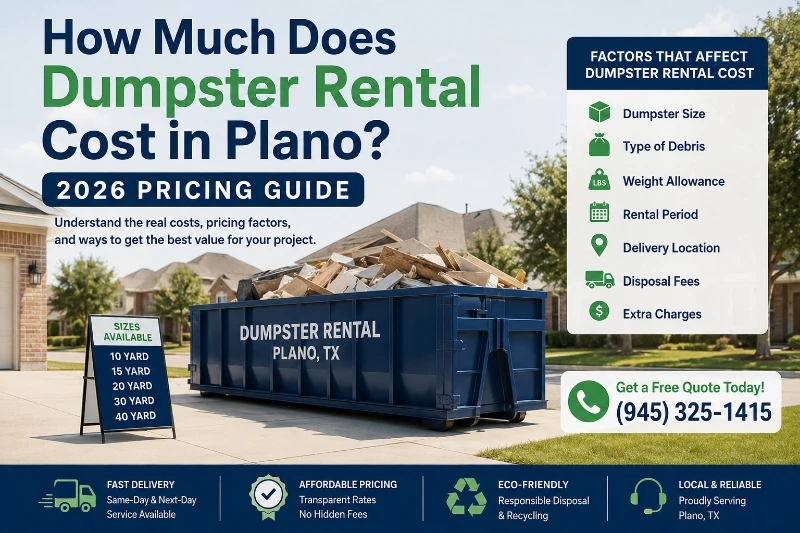
The final price can depend on several factors:
- Dumpster size
- Type of debris
- Weight of the material
- Rental period
- Delivery location
- Pickup requirements
- Disposal or landfill fees
- Local placement considerations
For example, a homeowner might say:
I just need a dumpster for a garage cleanout.
A contractor may say:
I need a container for drywall, cabinets, and flooring.
Someone replacing a roof could ask:
How much will a dumpster for shingles cost?
Those sound like similar requests, but they’re not the same job. The debris type and volume can change the container recommendation and the overall cost.
Origin & Background
Dumpster rental became popular as construction, renovation, commercial development, and residential cleanup projects created more waste than ordinary trash collection could handle.
Instead of making repeated trips to a disposal facility, customers could have a large container delivered directly to the property.
That simple idea changed the cleanup process.
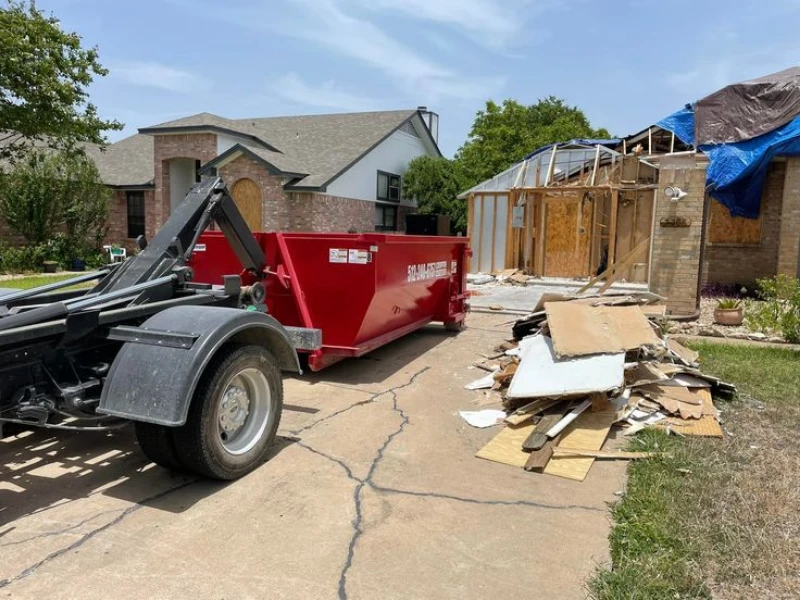
For Plano homeowners, the appeal is easy to understand. A garage can be emptied without filling several pickup trucks. A remodeling crew can keep debris contained. A roofing project can move faster when shingles and other waste have one designated place.
Plano’s continued residential and commercial development also creates many situations where temporary waste containers make practical sense.
A move, renovation, estate cleanout, landscaping project, or construction job can produce more debris than a household trash service is designed to handle.
How Pricing Has Evolved
Dumpster pricing has also become more project-specific.
Years ago, customers often thought mainly about the size of the container. Today, responsible pricing usually considers the entire job. A 20-yard dumpster filled with lightweight household junk isn’t necessarily treated the same way as a 20-yard container filled with heavy concrete.
That’s an important distinction. The physical size may be identical, but the disposal requirements can be completely different.
Social Media and Online Pricing
Online searches have made dumpster pricing easier to compare, but they have also created confusion. A customer may see a low advertised price and assume every project qualifies for it.
Then they discover that the advertised amount may depend on a particular dumpster size, rental period, weight allowance, delivery area, or debris type. That’s why comparing the total rental terms is more useful than comparing one headline number.
Real-Life Conversations
WhatsApp Conversation
Person A:
How much is a dumpster in Plano? I only need one for a garage cleanout.
Person B:
Depends on how much you’re getting rid of. What kind of stuff?
Person A:
Old furniture, boxes, broken shelves, and some flooring.
Person B:
Then you probably don’t need the biggest one. Ask them about a 10, 15, or 20-yard option.
Person A:
That’s what I was hoping. I didn’t want to pay for a huge container.
Instagram DM
Person A:
Do you know how much a dumpster costs for a kitchen remodel?
Person B:
Not exactly. Cabinets and drywall can add up quickly.
Person A:
That’s what I was worried about.
Person B:
I’d give them the kitchen size and tell them exactly what you’re removing. They can recommend the right container.
TikTok Comments
Person A:
Why are dumpster prices so different?
Person B:
Because they’re not only charging for the box. Size, weight, disposal, delivery, and rental time all matter.
Person A:
So the cheapest advertised price isn’t always the cheapest total?
Person B:
Exactly.
Text Message
Person A:
Need a dumpster Friday. Roof replacement.
Person B:
How many squares?
Person A:
About 25.
Person B:
Tell the dumpster company that. Roofing debris can be heavy, so they need the project details before giving you a useful quote.
Emotional & Psychological Meaning
Dumpster rental is rarely something people plan because they’re having an easy week.
Usually, there’s a reason behind it.
Someone is moving out of a longtime home. A family is cleaning a relative’s property. A homeowner is finally tackling a garage that has been packed for years. A contractor is trying to finish a project before the next deadline.
That matters because price isn’t the only concern.
People also want certainty.
They want to know:
- Will the dumpster arrive when promised?
- Will it fit where I need it?
- Will I choose the wrong size?
- Will there be surprise charges?
- Can I finish the project within the rental period?
- What materials are allowed?
In our experience, those questions often matter just as much as the advertised rental price.
Imagine standing in your driveway with half your garage already emptied.
At that point, discovering that the dumpster is too small is frustrating. You may need another container, another pickup, or another disposal trip.
A slightly more informed decision at the beginning can prevent that headache.
Usage in Different Contexts
Home Cleanouts
Homeowners often rent dumpsters for garage cleanouts, move-outs, estate cleanups, and general decluttering. These projects usually involve mixed household debris such as furniture, boxes, cabinets, flooring, and other unwanted items.
The right size depends on the volume rather than simply the number of rooms.
Remodeling Projects
Kitchen and bathroom renovations can produce surprisingly large debris piles.
Cabinets, drywall, flooring, countertops, fixtures, packaging, and other materials quickly take up space.
For that reason, telling the rental company exactly what you’re removing is more useful than simply saying, “I need a medium dumpster.”
Roofing Projects
Roofing debris deserves special attention because shingles and related materials can become heavy.
A container that seems large enough by volume may reach its weight allowance sooner than expected.
Always explain that the dumpster will be used for roofing debris before booking.
Construction
Construction sites often need larger containers because debris can accumulate quickly. Wood, drywall, packaging, flooring, and other construction materials may require more space and more frequent pickups. Contractors should also consider jobsite access and the project’s expected timeline.
Yard Cleanup
Branches, brush, and other yard waste can take up considerable space. The correct container depends on the volume and the disposal rules that apply to the material.
Commercial Projects
Retail renovations, office cleanouts, property turnovers, and other commercial projects may require larger containers or multiple pickups. Scheduling can also matter more when customers, employees, tenants, or contractors need access to the property.
When NOT to Choose a Dumpster
A dumpster isn’t automatically the best choice for every cleanup. If you have only a few bags of ordinary household trash, regular collection may be more practical. Likewise, a small amount of junk may be easier to dispose of through another service. Heavy materials deserve special caution.
Concrete, dirt, brick, tile, and similar debris can become extremely heavy. Before placing these materials in a dumpster, confirm that the container and disposal arrangement are suitable for them. You should also ask about prohibited materials before delivery. Don’t assume that everything from a demolition or cleanout can go into the same container.
Situations That Need Extra Planning
A dumpster may require additional planning when:
- The property has limited driveway space
- The container must be placed on a street
- The project involves unusually heavy debris
- The job requires a longer rental period
- The property has gates or restricted access
- The project needs multiple pickups
When in doubt, explain the entire project before booking.
Common Misunderstandings
The Biggest Dumpster Is Always Better
Not necessarily.
A larger dumpster gives you more room, but unused capacity can mean unnecessary expense. The goal is to choose enough space without dramatically overestimating the project.
A Cheap Advertised Price Is My Final Price
Not always.
A quote may depend on container size, rental duration, delivery location, weight allowance, and disposal requirements. Always ask what is included.
All Debris Costs the Same
It doesn’t.
Light household junk and heavy construction debris can have very different disposal considerations.
I Can Fill It Above the Top
Dumpster loading rules matter.
Overloading can create transportation and safety problems. Materials generally need to remain within the provider’s permitted loading requirements.
I Only Need to Tell Them the Dumpster Size
The size is only part of the conversation.
A better request includes the project type, debris type, approximate volume, delivery location, and desired rental period.
Comparison Table
| Option | Best For | Main Cost Consideration | Potential Concern |
| 10-yard dumpster | Small cleanouts | Smaller capacity | May fill quickly |
| 15-yard dumpster | Small renovations and cleanouts | Capacity and debris type | Can be too small for major projects |
| 20-yard dumpster | Remodels and larger cleanouts | Size, weight, rental period | Heavy debris may affect pricing |
| 30-yard dumpster | Large renovations and construction | Volume and weight | More capacity than small projects need |
| 40-yard dumpster | Major construction or commercial cleanup | Size and disposal requirements | Usually unnecessary for small residential jobs |
| Junk removal | Smaller amounts or labor-needed jobs | Labor and item volume | Less control over cleanup timing |
| Multiple dumpster pickups | Long or large projects | Number of hauls | Requires scheduling |
Key Insight
The best option isn’t necessarily the cheapest container or the largest container. It’s the one that matches your project’s volume, material, weight, access, and timeline.
Variations / Types
1. 10-Yard Dumpster
A compact option for smaller cleanup projects, light renovations, and limited debris.
2. 15-Yard Dumpster
A useful middle-ground choice when a 10-yard container feels too small but a larger roll-off would create unnecessary capacity.
3. 20-Yard Dumpster
Often practical for home renovations, garage cleanouts, flooring projects, and moderate amounts of debris.
4. 30-Yard Dumpster
Designed for larger cleanouts, construction projects, renovations, and substantial debris volumes.
5. 40-Yard Dumpster
A high-capacity option for major construction, commercial cleanup, and large-scale projects.
6. Residential Dumpster
Designed around household projects such as moving, remodeling, decluttering, and estate cleanouts.
7. Construction Dumpster
Used for larger volumes of construction-related materials generated during building or renovation work.
8. Roofing Dumpster
A container selected specifically around roofing debris and the weight considerations associated with shingles and related materials.
9. Commercial Dumpster
Used for office, retail, property management, renovation, and other commercial cleanup needs.
10. Yard Waste Dumpster
Used for suitable yard debris generated during landscaping, trimming, property cleanup, or seasonal maintenance.
How to Respond When Someone Asks About Dumpster Pricing
Casual Reply
Tell me what you’re cleaning up and roughly how much debris you have. The size can make a big difference.”
Funny Reply
Don’t order the monster dumpster for three broken chairs and a garage full of cardboard.
Mature Reply
Dumpster pricing depends on the container size, debris type, rental period, weight allowance, and delivery location. I’d get a quote based on the actual project.”
Respectful Reply
I’d recommend explaining the project to the rental company first. They can help you choose an appropriate size and clarify the total rental terms.”
Regional & Cultural Usage
Dumpster rental conversations are generally practical, but local expectations can influence how people approach the service.
Western Culture
In the United States, dumpster rental is commonly associated with home improvement, moving, renovation, construction, and large-scale cleanup. People often compare convenience and price before choosing a provider.
Asian Culture
In many Asian markets, waste removal may be handled differently depending on local housing density, municipal collection systems, and available disposal services. The concept of renting a large private container is more closely associated with particular construction or commercial situations in some areas.
Middle Eastern Culture
Waste management practices can vary significantly between countries and cities.
Large construction and property-development projects commonly involve organized waste handling, while residential cleanup options depend heavily on local services.
Global Internet Usage
Online discussions have made dumpster terminology more familiar worldwide.
People can now compare American home renovation practices, construction cleanup methods, and rental models even when those services work differently in their own communities.
Generational Differences
Younger homeowners may begin with online searches, social media recommendations, and quick comparison searches.
Older homeowners may rely more heavily on referrals, phone calls, contractors, or local recommendations. Neither approach is necessarily better. The important thing is getting clear information before booking.
Is Dumpster Rental Safe for Kids?
A rented dumpster should be treated as a restricted work area. Children should not climb inside, play around the container, or approach it while loading is taking place. Sharp objects, nails, broken materials, heavy debris, and unstable items can create serious hazards.
Keep children away from the dumpster and make sure household members know where it has been placed. The same applies to pets. A dumpster is a waste container, not a storage area or play space.
Conclusion
Your actual cost depends on the dumpster size, material you’re throwing away, rental period, delivery location, weight allowance, and disposal requirements. That’s why two people living only a few miles apart can receive very different quotes.
A homeowner cleaning out a garage may need a relatively small container. A family renovating an entire house may need considerably more capacity. A roofing contractor has a different set of weight considerations altogether.
The smartest approach is simple: describe the project honestly, explain the debris you’ll be disposing of, estimate how much material you expect, and ask what the quoted price includes.
You don’t need to become a dumpster expert before making a decision.
You just need enough information to avoid choosing the wrong size, misunderstanding the rental terms, or paying for capacity you don’t need. When the right dumpster arrives, and you can finally stop looking at that growing pile of debris in your driveway, the value becomes pretty obvious.
Common Dumpster Rental Prices questions
Have more questions
Our team is available 24/7 to answer your questions and help you understand your options after Dumpster Rental. Contact Us or


